Background
East Sussex, UK
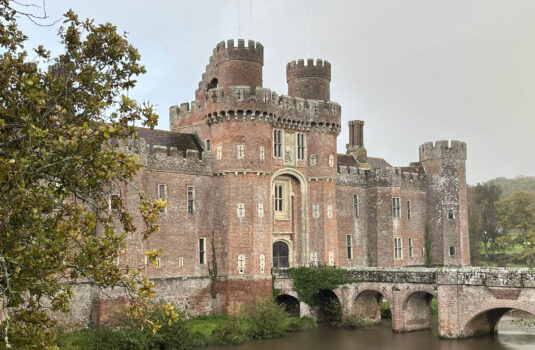
Herstmonceux Castle is one of England’s most important surviving early brick buildings, a Grade I listed, moated 15th-century structure set in East Sussex.
Project Overview
Hockley & Dawson were appointed to provide urgent and sensitive structural engineering support to stabilise and repair the South Gatehouse—one of the castle’s most architecturally significant and structurally vulnerable elements.
Working alongside heritage stakeholders and conservation teams, we designed structural repairs to the twin turrets, parapets, and stone cantilever corbels, while also addressing floor restraint issues, degraded roofing, Elizabethan Bay ceilings, and significant basement deterioration. The project reflects our deep experience in heritage engineering—balancing structural safety with minimal intervention and long-term conservation principles.
Site Context
Herstmonceux Castle’s South Gatehouse serves as the primary entrance across the arched moat bridge. Flanked by turrets and crenelated brick parapets, it includes complex bonded brick masonry, shallow arches, and delicate cantilevered stone details. Over time, weathering, water ingress, and previous inadequate repairs had led to significant decay, instability, and risk of failure—particularly at high level.
Given the castle’s historical significance and the potential danger from falling masonry, repairs were considered urgent. A bespoke scaffold solution was developed to safely access and temporarily support the structure, enabling thorough inspection and intervention while maintaining the castle’s visual and functional integrity.
Key Structural Interventions
South Gatehouse Parapets and Corbels
• Structural assessment revealed major deterioration in the stone cantilever bearers supporting the parapets and merlons—posing a risk of sudden failure.
• Bespoke remedial details were developed to stabilise and partially rebuild sections of the parapet.
• Around 10 severely decayed corbels were replaced, and failing masonry arches rebuilt using traditional methods.
• Stainless steel anchors and restraint fixings were introduced discreetly to maintain structural integrity.
Turret Roofs and Floor Restraints
• East and west turrets had significant vertical and diagonal cracking caused by historic filler joist construction.
• Moisture trapped within internal finishes led to rusting joists, concrete spalling, and cracked masonry.
• Damaged concrete floors were carefully removed and replaced with breathable timber floors, bolted to masonry with stainless steel fittings and separated by DPM.
• New timber floors also provided opportunities for improved lateral restraint.
Internal Ceilings and Structural Monitoring
• The Elizabethan Bay ceiling (SF2) was structurally strengthened and sympathetically repaired.
• Deflection and joint movement in the Drum Room’s timber beams and supporting corbels were noted; structural monitoring was recommended over short to medium term.
Basement and Cellar Repairs
• Corrosion of reinforcement in the basement slabs due to long-term moisture ingress required extensive localised concrete repairs.
• Cracked and spalled concrete was cut back, reinforcement cleaned or replaced, and slabs made good using Sika-based epoxy repair systems.
• Moisture ingress above was mitigated, and improved ventilation introduced to prevent future decay.
Perimeter and Garden Wall Conservation
• Deteriorated masonry at the top of the listed garden wall was stabilised through selective rebuilding and repointing using lime mortars.
• Vegetation damaging the masonry was carefully removed and long-term control measures proposed, with particular care to preserve the original brick fabric.
Conservation Strategy
Our work was carried out under close consultation with Historic England and aligned with conservation best practices. Traditional lime mortars, heritage bricks, and non-ferrous fixings were used throughout. The phasing of work was scheduled to respect seasonal constraints and avoid damage to historic fabric. Digital surveys and structural modelling supported precision design and scaffold engineering.
Summary
The South Gatehouse project at Herstmonceux Castle reflects the complex interplay between urgent structural safety and long-term conservation of historic fabric. Hockley & Dawson’s detailed inspections, bespoke engineering solutions, and careful execution ensured that this iconic gateway—once at risk of sudden collapse—has been stabilised with respect and precision, ready to endure for generations to come.